The 14th Australia-Solomon Islands Business Forum (#14ASIBF) drew one of its largest delegations, reflecting rising confidence in the bilateral economic partnership. Leaders and industry figures set clear priorities for investment, infrastructure, capability building and trade as both countries look to convert opportunity into long-term growth.

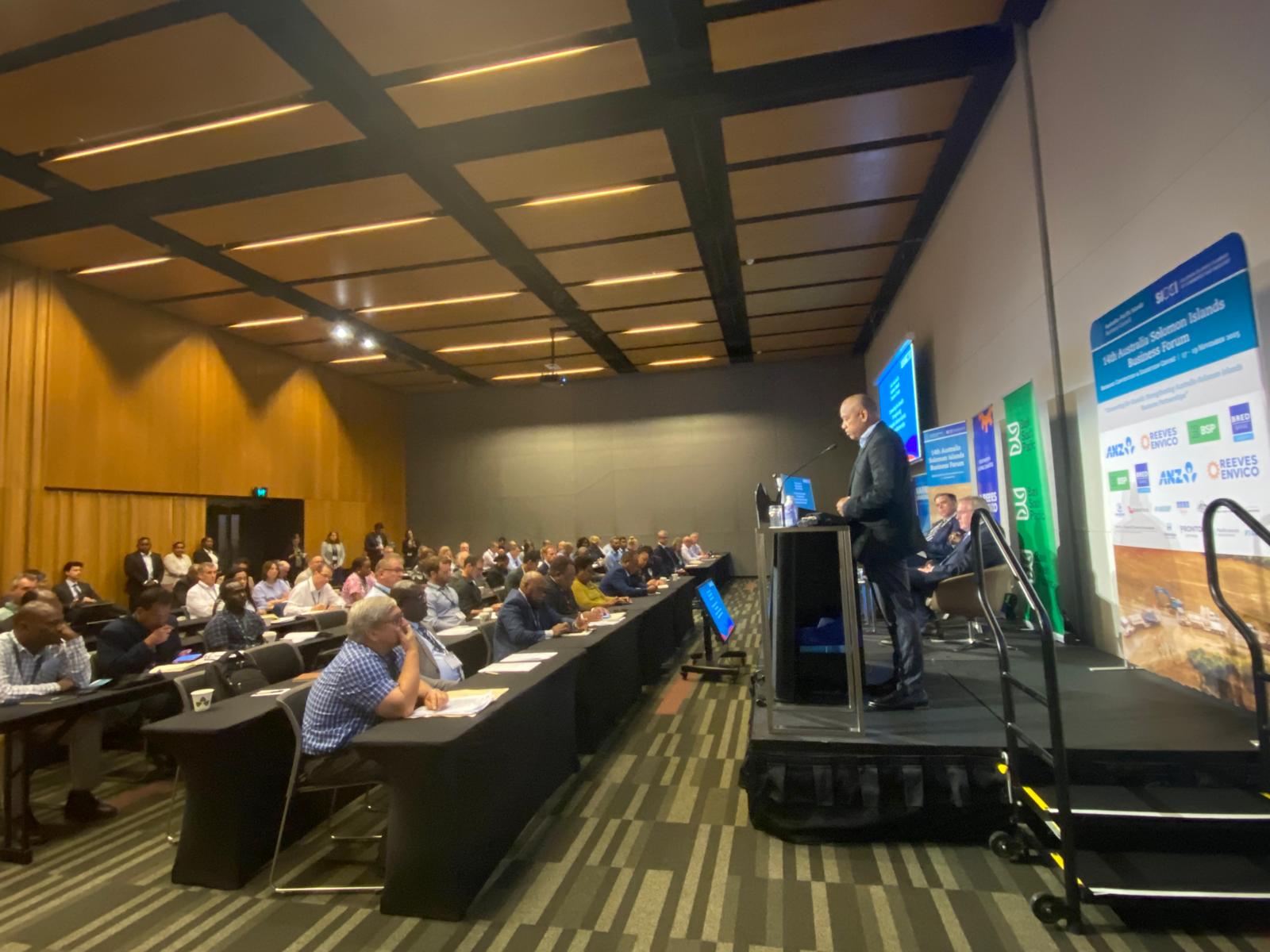
Solomon Islands Prime Minister Jeremiah Manele addresses the delegates.
One of the most well-attended gatherings in its history, the 14th Australia–Solomon Islands Business Forum brought more than one hundred and fifty delegates to Brisbane from 17 to 19 November, signalling renewed confidence in the economic partnership between the two countries. The event opened with keynote addresses from Hon Jeremiah Manele, Prime Minister of the Solomon Islands, and Hon Milton Dick MP, Speaker of the Australian House of Representatives, who set a forward-looking agenda focused on investment, capability development and shared growth.
Prime Minister Manele reaffirmed his Government’s commitment to strengthening the business environment through regulatory upgrades, infrastructure investment and support for productive sectors. He said the private sector would be central to job creation and economic resilience, and encouraged deeper collaboration on investment-ready opportunities. Australia echoed this message, outlining ongoing support across infrastructure, agriculture, fisheries, forestry and tourism, and highlighting the Pacific Australia Labour Mobility scheme as a key driver of skills and income generation.
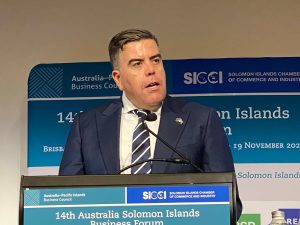
Hon Milton Dick MP, Speaker of the Australian House of Representatives delivers the Australian Government’s keynote address: Photos: Dev Nadkarni
Economic briefings painted a picture of a steadily recovering economy. The Solomon Islands has grown by fifty per cent since the pandemic, inflation is expected to return to the two to five per cent target band, and debt at 36 per cent of GDP remains sustainable. Growth of around three per cent is forecast as revenue strengthens and new infrastructure spending flows into the economy.
Delegates heard updates on reforms to improve the investment climate, including streamlined foreign investment processes, Special Economic Zones and a new Investment Promotion Authority supported by an investor information portal. Opportunities in agricultural exports, especially in fresh and processed goods, were noted alongside the need for stronger supply chains and biosecurity systems.
Infrastructure emerged as one of the strongest themes of the Forum. Priority projects include upgrades to roads, drainage systems, provincial transport links and domestic airports. Speakers highlighted the importance of local participation and training, with partnerships between Solomon Islands firms and experienced Australian companies positioned as pivotal to building long-term capability.
Sessions on water security, logistics and fisheries underscored major development priorities. Significant investment is underway to expand water supply and sanitation, while logistics providers outlined ongoing freight constraints. The Bina Harbour tuna processing project has reached the thirty per cent mark, offering long-term opportunities for industry and local suppliers.
Tourism and trade rounded out the program, with commitments to translate discussions into practical outcomes that deliver broad benefits across the Solomon Islands economy.