The Federated States of Micronesia (FSM) and the World Bank are strengthening cooperation on infrastructure, energy, digital development and workforce skills, with discussions aimed at supporting economic growth and improving the country’s long-term development prospects.
FSM President Wesley Simina met World Bank Pacific Islands Regional Division Director Tatiana A. Proskuryakova in Pohnpei in late September to review development priorities and opportunities for continued financial and technical cooperation.
Their discussions covered energy, infrastructure, digital connectivity, climate resilience, human capacity and sustainable economic development.
The meeting also examined FSM’s priorities under the World Bank’s latest International Development Association financing cycle, IDA21, and the country’s transition towards blended financing arrangements.
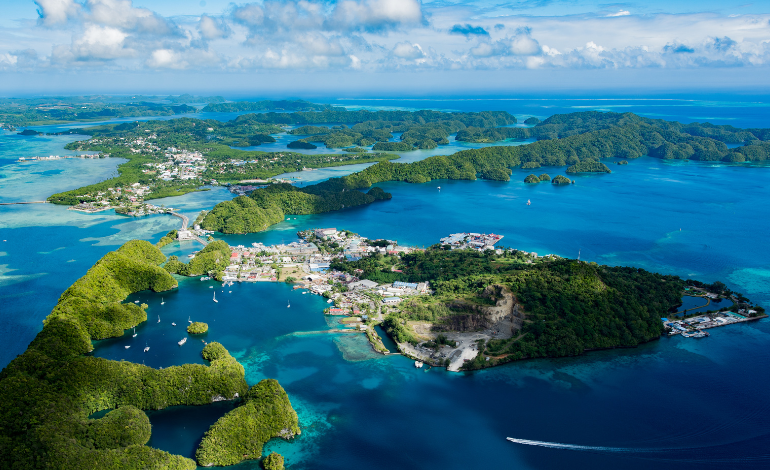
For the FSM, where its four states are separated by vast ocean distances, infrastructure investment and reliable connectivity remain central to economic development and access to markets and essential services.
Following their meeting, President Simina and Ms Proskuryakova attended a ceremony at Pohnpei Island Central School marking the handover of vocational education equipment financed through the World Bank-supported Skills and Employability Enhancement Project.
The equipment will support Career and Technical Education programmes at Pohnpei Island Central School, Nanpei Memorial High School and Madolenihmw High School.
Students at the three institutions are beginning a four-year progressive technical education programme intended to improve practical skills and prepare young people for employment and further training.
President Simina described the equipment as an investment in the capabilities and future employment prospects of Micronesia’s young people.
The wider Skills and Employability Enhancement Project, approved by the World Bank in May 2022, has funding of US$17.7 million and is scheduled to run until June 2027.
Its objectives include improving access to vocational education, strengthening the quality and labour-market relevance of training, and helping students and graduates make the transition into employment.
The initiative also seeks stronger links between educational institutions and employers, addressing skills gaps that constrain private-sector development.
For Micronesia, expanding locally available technical capabilities could help reduce dependence on external expertise and support sectors such as construction, infrastructure maintenance, utilities and services.
The discussions with the World Bank reflect an approach combining investment in physical infrastructure with improvements in education, technical capacity and workforce development, both of which are essential to building a more diversified and resilient economy.