



A United Nations mining regulator has urged Pacific countries to move carefully as renewed interest in deep-sea minerals raises economic hopes and environmental concerns.
Pacific Island countries are being urged not to rush into deep-sea mining as global interest grows in seabed minerals used in batteries, electric vehicles and clean energy technologies.
The International Seabed Authority, the United Nations-backed body that regulates mining in international waters, has cautioned Pacific governments against being swept up in renewed commercial and geopolitical pressure to exploit the ocean floor.
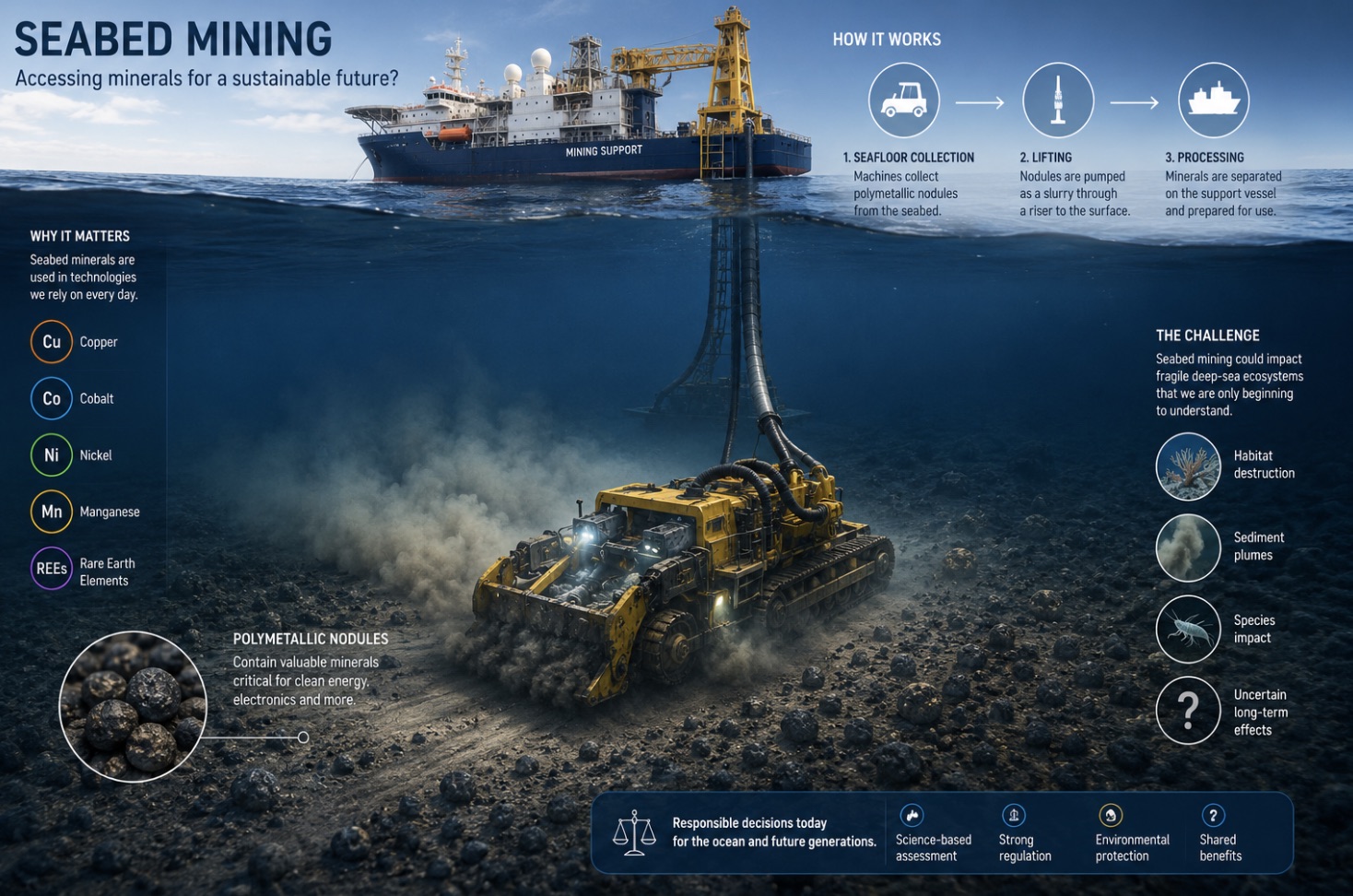
The warning follows increased interest from mining companies and governments seeking access to minerals such as cobalt, nickel, manganese and copper. These resources are viewed as important to the global energy transition, but the environmental risks remain deeply contested.
For Pacific countries, the issue presents a difficult choice. Deep-sea mining is promoted by some as a potential source of revenue, jobs and strategic leverage. For small island states with limited economic bases, the attraction of new income streams is understandable.
But scientists and environmental groups warn that deep-sea ecosystems are poorly understood and could be damaged by mining machines, sediment plumes, noise and habitat destruction. The economic benefits are also uncertain, particularly if island countries receive only limited returns while carrying long-term environmental risk.
The Pacific has already become a key theatre in the global debate. Some governments have shown interest in seabed minerals, while others have called for a moratorium or stronger safeguards until more scientific evidence is available.
The business dimension is equally complex. Mining companies argue that seabed minerals could support the clean energy transition, but opponents say the industry is moving faster than science, regulation and public consultation.
The ISA’s warning underlines the need for strong governance before any commercial extraction proceeds. Pacific countries will need to consider not only potential royalties, but also liability, environmental monitoring, community consent and regional solidarity.
For now, the message is clear: the seabed may contain economic opportunity, but the risks are too large for rushed decisions.

