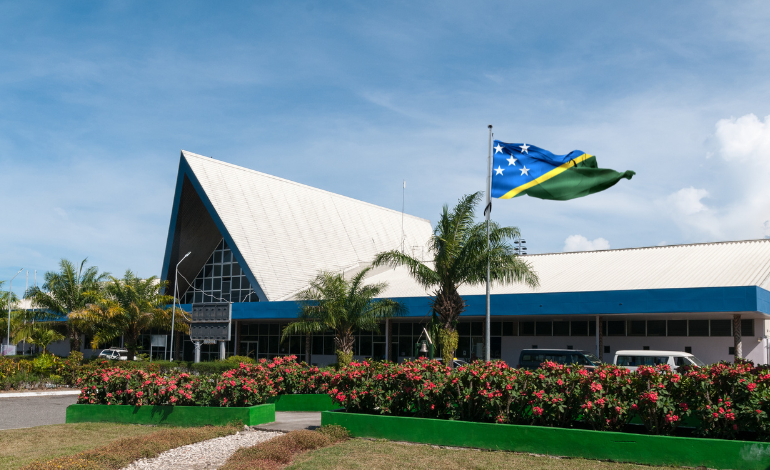
Construction of a new aviation complex building at Henderson has moved into the superstructure phase, marking a tangible milestone in the long-running effort to modernise Solomon Islands’ aviation infrastructure and improve the efficiency of the country’s primary international gateway.
The project is a central component of the broader upgrade of the Henderson International Airport precinct, which has been under planning and staged implementation for several years. Once completed, the new complex is expected to house a range of aviation-related functions, including airline operations, regulatory agencies and service providers, bringing together activities that are currently dispersed across the airport and surrounding areas.
Aviation authorities say the consolidation is intended to ease operational bottlenecks, improve coordination between agencies and enhance safety oversight. Existing facilities at Henderson have struggled to keep pace with growth in passenger numbers and aircraft movements over the past decade, particularly during peak travel periods. Congestion, limited office space and ageing infrastructure have been persistent challenges for airlines and airport operators alike.
Reliable air connectivity is especially critical for Solomon Islands, an archipelagic nation where distances between islands make aviation an essential mode of transport rather than a discretionary one. For the business community, air services underpin everything from inter-island commerce and government administration to tourism, investment travel and the movement of high-value or time-sensitive cargo such as fresh produce and seafood.
Capacity constraints and infrastructure limitations at Henderson have, at times, restricted the growth of tourism and complicated efforts to attract new airline services. Industry stakeholders have long argued that improving airport infrastructure is a prerequisite for expanding route networks, increasing flight frequency and lifting service standards.
The advance to the superstructure phase in December signals that the project has moved beyond groundwork and foundation stages, providing visible evidence of progress after years of design, funding mobilisation and procurement. During the construction phase, the project is also expected to generate employment opportunities for local workers and contractors, injecting activity into the local economy.
Once operational, the upgraded aviation complex is expected to deliver long-term efficiency gains, support safer and more reliable operations, and strengthen the overall resilience of Solomon Islands’ aviation sector. For policymakers, it represents a strategic investment in connectivity that underpins broader economic development goals, particularly in tourism, trade and private-sector growth.