First non-sovereign investment signals growing willingness by development banks to finance Pacific enterprises directly rather than relying solely on government projects.
The Asian Development Bank has made its first direct private-sector investment in the Cook Islands, marking a shift in the way multilateral development finance is supporting business growth across the Pacific.
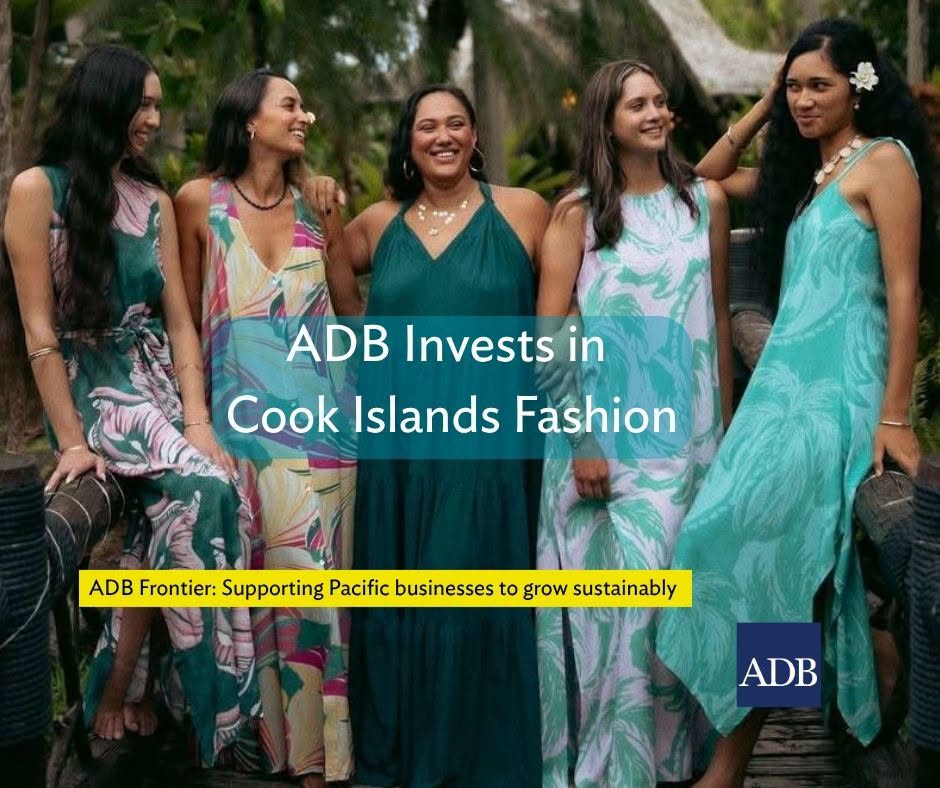
The investment, announced in July, backs a sustainable fashion enterprise in the Cook Islands and represents ADB’s first non-sovereign transaction in the country. While modest in scale, the move is significant because it demonstrates increasing confidence among development finance institutions in investing directly in Pacific businesses rather than channeling funds exclusively through governments.
For many years, multilateral financing in the Pacific has been dominated by roads, ports, airports, renewable energy projects and other public infrastructure. Private companies have often struggled to access long-term finance, particularly in smaller island economies where markets are narrow and commercial lending remains limited.
ADB’s latest investment suggests that approach is beginning to evolve.
The Cook Islands’ fashion sector has built a reputation by combining contemporary design with Pacific cultural identity and environmentally responsible production. Local designers have increasingly found export opportunities through niche international markets that value sustainable materials, ethical production and authentic Indigenous design.
Development banks see growing potential in these industries because they generate employment, create export earnings and support small business development without relying on large-scale resource extraction.
The transaction also reflects a broader trend among multilateral lenders to place greater emphasis on private-sector development. Institutions including ADB, the International Finance Corporation and the World Bank have expanded programmes designed to mobilise private capital, encourage entrepreneurship and strengthen local value chains across the Pacific.
For Pacific businesses, the implications extend well beyond the Cook Islands. Direct investment by a multilateral institution can provide more than capital. It often brings technical expertise, stronger corporate governance, improved environmental and social standards and greater credibility with commercial lenders and investors.
Those benefits can help businesses attract additional funding and expand into regional or international markets.
The announcement is also likely to encourage other Pacific enterprises seeking growth finance. Many businesses in sectors such as agribusiness, tourism, manufacturing and the creative industries have struggled to secure investment despite demonstrating strong commercial potential.
While public infrastructure will continue to dominate development spending across the region, ADB’s decision signals that private enterprise is becoming a larger part of the Pacific growth story. If similar investments follow, they could help broaden the region’s economic base, create higher-value jobs and strengthen the role of locally owned businesses in driving sustainable economic development.