Trade relations between New Caledonia and Vanuatu have come under strain after New Caledonia’s pro-France government announced the suspension of official trade cooperation with Vanuatu following renewed tensions over the disputed Matthew and Hunter Islands.
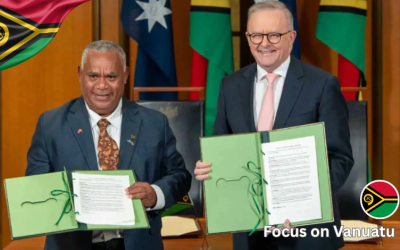
The decision followed a visit to Vanuatu by leaders of New Caledonia’s pro-independence Front de Libération Nationale Kanak et Socialiste (FLNKS), during which support was expressed for Vanuatu’s long-standing claim to sovereignty over the two uninhabited volcanic islands. In response, New Caledonia’s government described the move as a “lack of respect” and suspended official trade cooperation with its Melanesian neighbour.
While the announcement carries political significance, it is not a blanket trade embargo. As of 5 July 2026, there has been no public announcement prohibiting imports or exports, imposing customs restrictions or suspending commercial shipping services between the two territories. Rather, the suspension applies to official government trade cooperation and commercial engagement, making it primarily a diplomatic measure, although businesses will be watching closely for any escalation.
The immediate economic impact is likely to be limited because bilateral merchandise trade between the two economies is relatively modest. Based on the latest available customs data, annual two-way trade is estimated at between A$8 million and A$13 million. New Caledonia exports around A$6 million to A$10 million worth of goods to Vanuatu each year, while Vanuatu exports approximately A$2 million to A$4 million to New Caledonia.
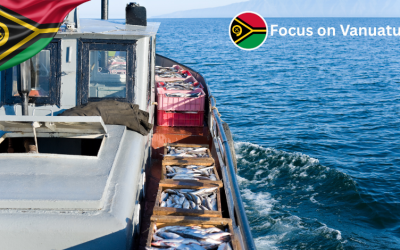
The trade largely consists of everyday commercial goods rather than major commodities. Vanuatu exports fresh fruit and vegetables, beef, kava, timber products, seafood and coconut products to New Caledonia. In the opposite direction, New Caledonia supplies Vanuatu with cement and other construction materials, manufactured food products, beverages, machinery, industrial equipment and consumer goods.
Although merchandise trade is relatively small, the broader commercial relationship extends beyond goods. Tourism, coastal shipping, yacht movements and business travel have traditionally linked Nouméa and Port Vila, while businesses in both economies have benefited from regional cooperation in agriculture, fisheries and transport. Any prolonged deterioration in relations could therefore have wider commercial implications than the trade figures alone suggest.
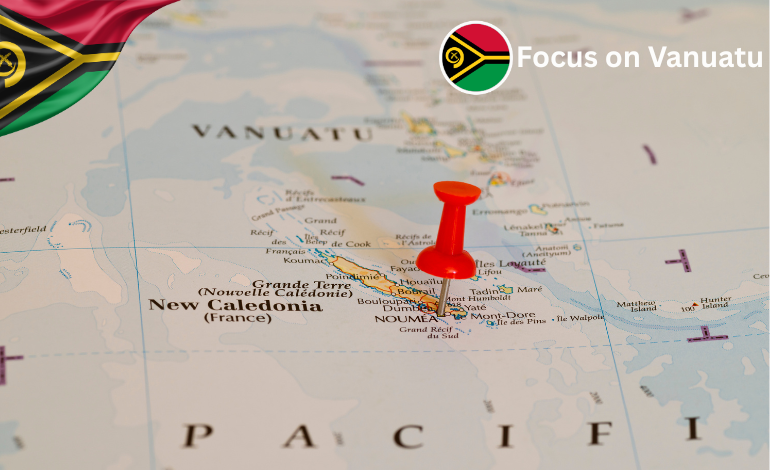
Matthew and Hunter Islands, located between New Caledonia and Vanuatu, have been claimed by both countries for decades. France administers the islands as part of New Caledonia, while Vanuatu maintains they form part of its sovereign territory. The issue has become increasingly intertwined with New Caledonia’s domestic political divisions between pro-independence and pro-France groups, adding another layer of complexity to an already sensitive regional dispute.
For businesses, the current suspension appears to be more symbolic than economically disruptive. However, it serves as a reminder that in the Pacific, political developments can quickly influence commercial relationships. Unless further measures are introduced, cross-border trade is expected to continue, but companies involved in shipping, tourism and regional commerce will be monitoring developments closely.