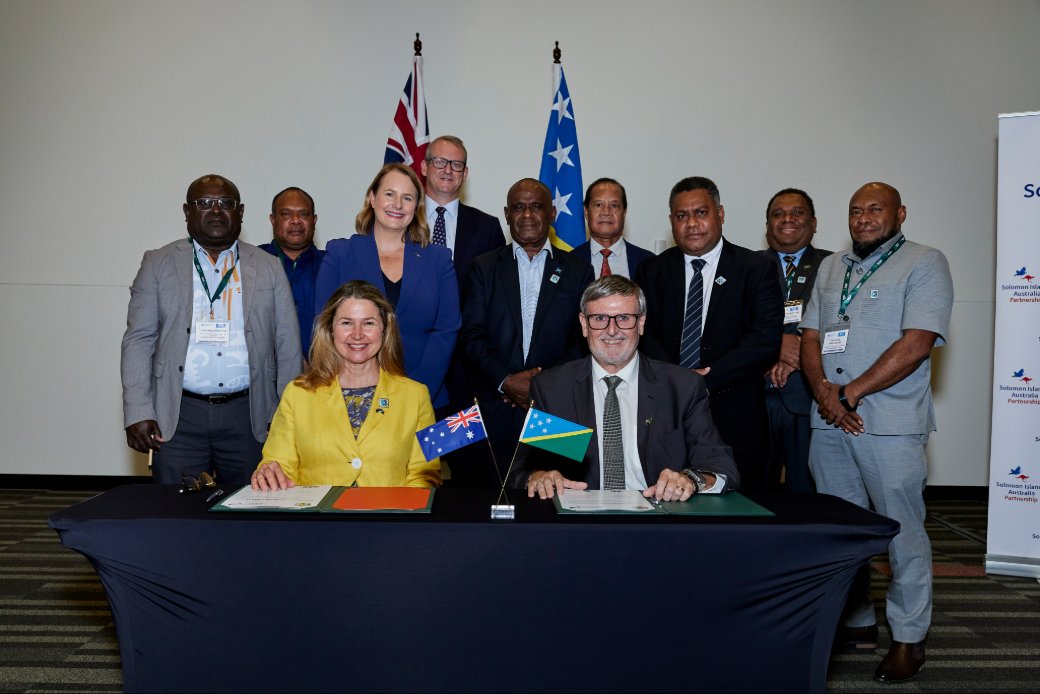
Australia and the Solomon Islands Submarine Cable Company (SISCC) have launched a major project that could transform the Solomon Islands’ internet connectivity, with wide-ranging implications for business, government services and the private sector. The project was announced on 19 November 2025 by Australian Infrastructure Financing Facility for the Pacific (AIFFP), in partnership with the Solomon Islands Government.
Dubbed the Adamasia Cable System 1, the new submarine cable will stretch 1,015 kilometres, interlinking the Solomon Islands with the broader Pacific via the planned Bulikula cable system being developed by Google and partners.
AIFFP is backing the project with an AUD 104 million financing package (USD 72.71 million), combining grant and loan components. The package also includes a contribution of AUD 1.8 million from AIFFP’s climate-infrastructure window to support off-grid electricity generation and energy storage at the cable landing station, reinforcing resilience in the face of climate and disaster risk.
The cable will provide critical redundancy for the existing international link — the Coral Sea Cable System (CS²). Until now, Solomon Islands has depended on that single subsea cable for international connectivity. With Adamasia in place, the country will have a far more resilient infrastructure able to withstand outages from weather events or technical failures.
For Solomon Islands’ private sector, the new cable could unlock transformative opportunities. A stable, high-capacity international connection would support cloud-based services, remote work, digital-service delivery, e-commerce and seamless communication with global markets. Government services, including health, education and administration, may become more reliable and accessible as remote communities gain better connectivity. The improved infrastructure should also attract foreign and regional investors who demand dependable bandwidth, enabling sectors such as tourism, agribusiness, fintech and offshore services.
Construction is expected to generate up to 100 local jobs during the civil works phase, contributing to immediate employment and skills building.
This is the third major AIFFP-financed project in Solomon Islands, following previous investments including off-grid renewable energy systems under the REnew Pacific programme and rehabilitation of infrastructure such as shipyards. The combination of digital connectivity and climate-resilient infrastructure shows a strategic push by Australia and Solomon Islands to build long-term economic foundations and resilient service delivery systems.
No public timeline has yet been provided for completion. Observers watching the region’s digital infrastructure note that the broader Pacific-wide Bulikula system, to which Adamasia will tie, is expected to come online next year, meaning early-to-mid 2026 could mark the start of reliability gains for Solomon Islands.
As the project proceeds, it will be vital for policy makers and business leaders to leverage the new connectivity potential — building digital-ready services, improving regulatory frameworks and encouraging private-sector investment in sectors that benefit from high-speed, reliable connectivity.